Floating Dock Services and Installation

Your floating dock is more than a place to tie up your boat. It’s the connection point between your home and your lake lifestyle. When that connection needs building, fixing, or maintaining, the quality of work determines whether you’re enjoying the water or dealing with problems.
Floating dock services cover everything from initial design and construction through years of repairs, maintenance, and repositioning as water levels change. This guide walks through what professional dock services include, how floating docks differ from fixed structures, and what to expect when working with a marine contractor on Georgia and South Carolina lakes.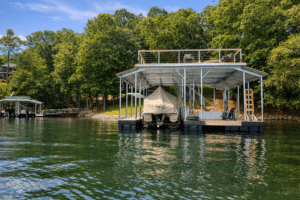
Professional floating dock services in Georgia and South Carolina
Floating dock services cover the full lifecycle of waterfront dock systems, from design, construction, installation, repair, maintenance, and relocation, delivered by licensed marine contractors who specialize in lake environments. For property owners on lakes like Lanier, Hartwell, and Allatoona, working with a regional specialist means getting a dock built for your specific shoreline conditions, local permit requirements, and the way you actually use your waterfront.
What exactly falls under floating dock services? The scope is broader than most people expect:
- Design and installation: Custom configurations based on your shoreline slope, water depth, boat sizes, and lifestyle
- Repair services: Fixing structural damage, replacing failed flotation, restoring storm damage
- Maintenance: Pressure washing, hardware inspections, preventive care
- Dock moving: Repositioning your dock when water levels shift or your needs change
Most lakefront owners interact with all four categories at some point. A new dock eventually requires maintenance, and changing water levels on Corps-managed lakes often call for repositioning services.
Dock design and installation
The process starts with a site visit. A dock specialist walks your shoreline, measures water depth at various points, evaluates the slope, and asks questions about how you plan to use the space. Do you have multiple boats? Want a swim platform? Need covered slips? The answers shape every design decision that follows.
From there, you’ll review configuration options such as slip count, roof style, decking material, and accessory placement, before finalizing plans. Installation typically takes a few weeks once permits clear, though complex builds with multiple slips or integrated lifts run longer.
Dock repair and storm damage restoration
Docks take constant abuse from the sun, water, waves, and weather. Over time, flotation tanks lose buoyancy, hardware loosens, and decking wears. Storm damage can be more dramatic, creating bent frames, sections torn from moorings, and scattered components.
The good news: most repairs are completed quickly when a contractor keeps common parts in stock. Flotation replacement, hardware tightening, and decking repairs often wrap up the same day. Storm restoration depends on damage severity, ranging from straightening and reattaching sections to full rebuilds.
Before:

After:
Dock maintenance and cleaning
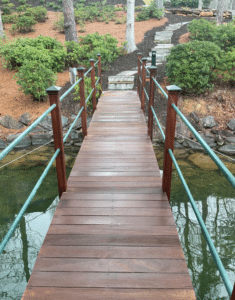
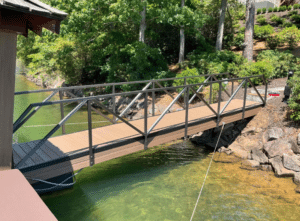
Routine maintenance catches small problems before they become expensive ones. Pressure washing removes the algae, dirt, and organic buildup that accumulates each season. Professional inspections check flotation condition, hardware tightness, cable wear, and structural integrity.
Twice-yearly maintenance, both once before boating season and once as a thorough fall dock inspection, keeps most docks in solid condition for decades.
Dock moving and relocation
Lakes managed by the Army Corps of Engineers experience significant water level changes throughout the year. When levels drop, your dock may end up sitting in shallow water or even on the exposed lake bottom. Professional dock moving services reposition your structure safely, without damaging the dock or shoreline.
Relocation also comes into play when reconfiguring your waterfront layout or transferring a dock to a new owner.
Custom floating dock construction and installation
Floating docks work differently from fixed docks. Instead of anchoring to the lake bottom with pilings, floating docks rest on buoyant tanks and rise or fall with water levels. This design makes them the practical choice for lakes where water depth changes seasonally, which includes most Corps-managed lakes in Georgia and South Carolina.
Complimentary design consultation
A proper consultation goes well beyond measuring your shoreline. Your dock specialist evaluates soil conditions, slope angle, sun exposure, prevailing wind direction, and water depth variations throughout the year. Properties with steep slopes or signs of erosion may also benefit from rip rap shoreline protection before dock installation begins. Just as important: understanding how you use your waterfront.
Do you entertain frequently? Store kayaks? Have kids who swim off the dock? Own a pontoon and a fishing boat? Each answer influences slip placement, platform sizing, accessory selection, and overall layout.
Marine-grade materials and craftsmanship
Material choices, especially the decision between aluminum and wood, determine how long your dock lasts and how much upkeep it requires. Quality floating docks typically use:
- Marine-grade aluminum framing: Lightweight, strong, and naturally resistant to rust and corrosion in freshwater environments
- Premium PVC decking: Brands like TimberTech offer durability, slip resistance, and minimal maintenance compared to wood
- Aluminum roofing: Long-lasting protection from UV damage and weather, available in multiple colors and styles
Higher-quality materials cost more initially but reduce long-term maintenance and extend dock lifespan considerably.
Permitting and lake regulation compliance
Many Georgia and South Carolina lakes fall under the U.S. Army Corps of Engineers jurisdiction. Lake Lanier, Lake Hartwell, and Lake Allatoona all require permits for dock construction, and each has specific rules about dock size, placement, setbacks, and materials.
Experienced dock builders handle permitting as part of the project. They know which forms to file, what documentation the Corps requires, and how to avoid common approval delays.
Floating dock repair services
Even well-built docks require repairs eventually. Weather, UV exposure, wave action, and regular use all take their toll. Knowing what to watch for helps you catch problems early, when fixes are simpler and cheaper.
Structural and flotation repairs
Flotation systems (the foam-filled tanks beneath your dock frame) can degrade over time or suffer puncture damage from debris. Warning signs include a dock that lists to one side, sits noticeably lower in the water, or feels unstable when you walk on it.
Structural issues show up as bent framing, corroded connections, cracked welds, or loose hardware. Addressing flotation and structural problems promptly prevents secondary damage to other dock components.
Storm damage restoration
Severe storms can tear docks from their anchor points, bend aluminum framing, and scatter sections across the lake. The restoration scope varies widely. Some docks only require straightening and reattachment, while others need partial or complete rebuilds.
If your dock sustained storm damage, photographing the condition from multiple angles helps your repair team assess the situation before arriving on-site.
Dock remodels and upgrades
Sometimes the goal isn’t repair but improvement. Dock remodels can change your layout, add slips, update roof styles, upgrade railings, or integrate accessories you’ve been wanting. Common upgrade projects include adding swim platforms, installing storage lofts, widening ramps, and integrating boat lifts.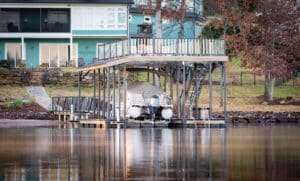
Why choose a floating dock for your waterfront property
The choice between floating and fixed docks comes down to your lake’s characteristics and how you plan to use your waterfront. Here’s how the two types compare:
| Feature | Floating dock | Fixed dock |
|---|---|---|
| Adapts to water levels | Yes—rises and falls automatically | No—may become unusable at low water |
| Installation | Moderate complexity | Higher complexity (requires pilings driven into the lake bottom) |
| Best suited for | Lakes with fluctuating water levels | Lakes with stable water levels |
| Relocation | Straightforward | Difficult and expensive |
| Permitting | Required on most regulated lakes | Required on most regulated lakes |
For lakes managed by the Army Corps of Engineers, floating docks are often the only practical option. Water levels on Lanier, Hartwell, and Allatoona can shift several feet between seasons, which would leave a fixed dock either submerged or stranded, depending on the time of year.
Boat lift and PWC port installation for floating docks
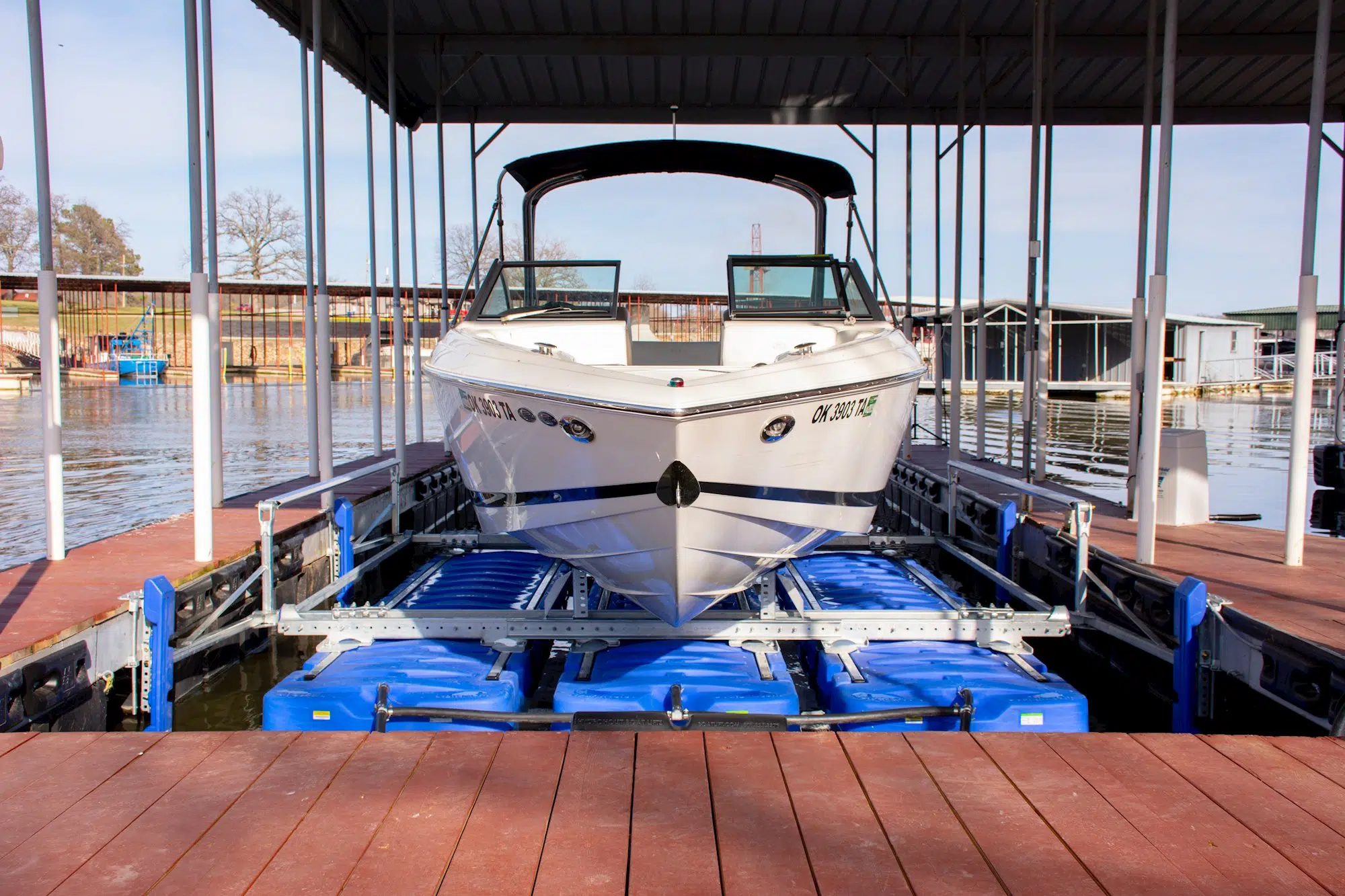
A dock without a lift means your boat sits in the water full-time, exposed to hull growth, corrosion, and wave damage. Integrating a boat lift or personal watercraft port into your floating dock keeps your watercraft dry-docked and protected when not in use.
HydroHoist and ShoreMaster boat lifts
HydroHoist and ShoreMaster are two of the most widely installed lift brands in the Southeast. HydroHoist systems use air-displacement technology, where essentially large tanks fill with air to raise your boat out of the water. ShoreMaster offers vertical lifts and hydraulic options for different applications.
The right lift depends on your boat’s weight, your water depth, and your dock configuration. A lift rated for a 4,000-pound fishing boat won’t work for a 10,000-pound pontoon. For areas prone to significant water level drops, a shallow water boat lift keeps your watercraft protected even at low pool.
Personal watercraft docking platforms
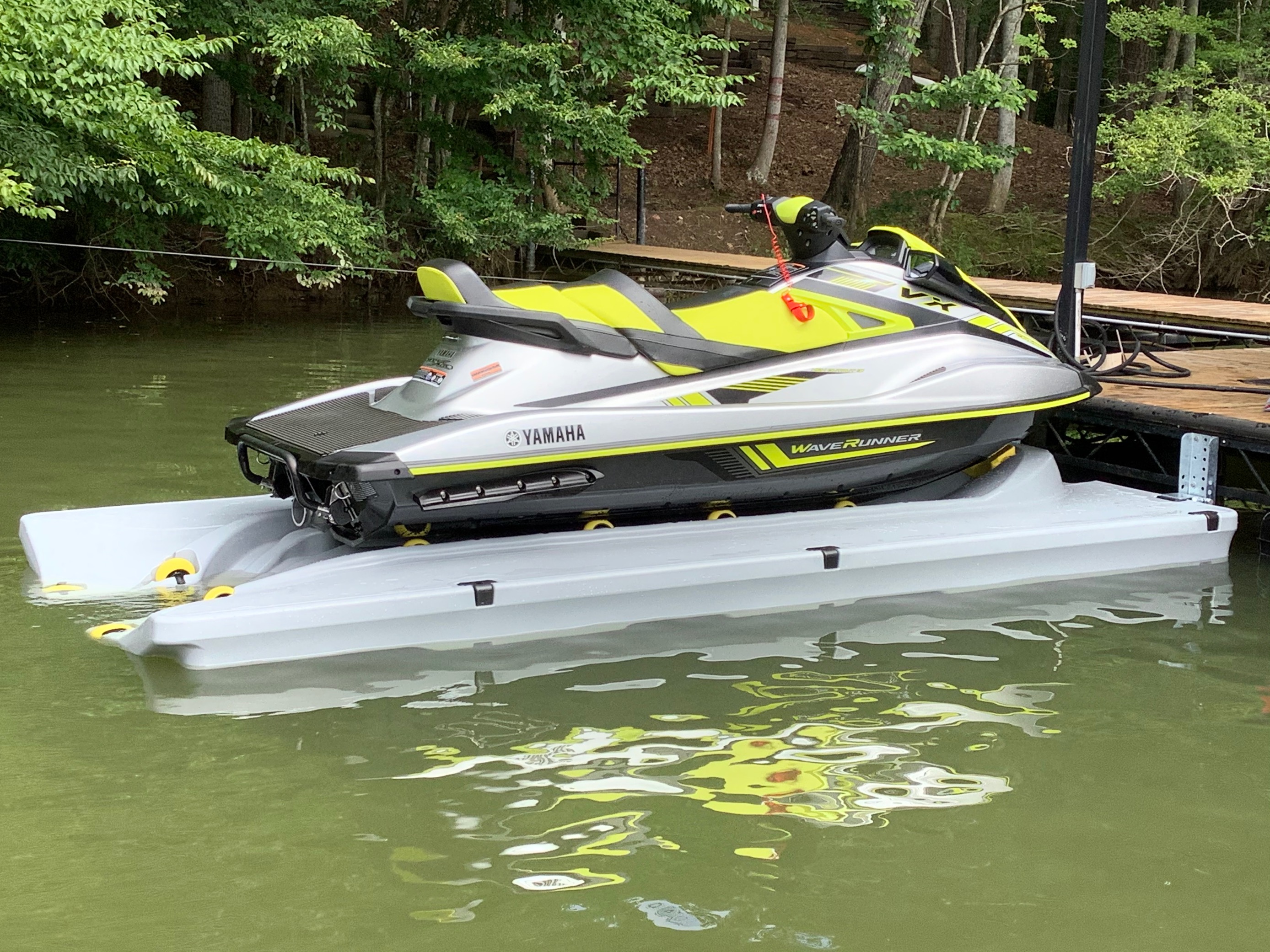
PWC lifts are designed for jet skis and similar craft and provide drive-on convenience and dry storage. Models like the HydroHoist HP series feature centering rollers, soft keel rests, and quick-launch designs that minimize time at the dock.
Keeping personal watercraft out of the water eliminates hull cleaning, reduces maintenance, and extends the life of the craft.
Custom dock accessories
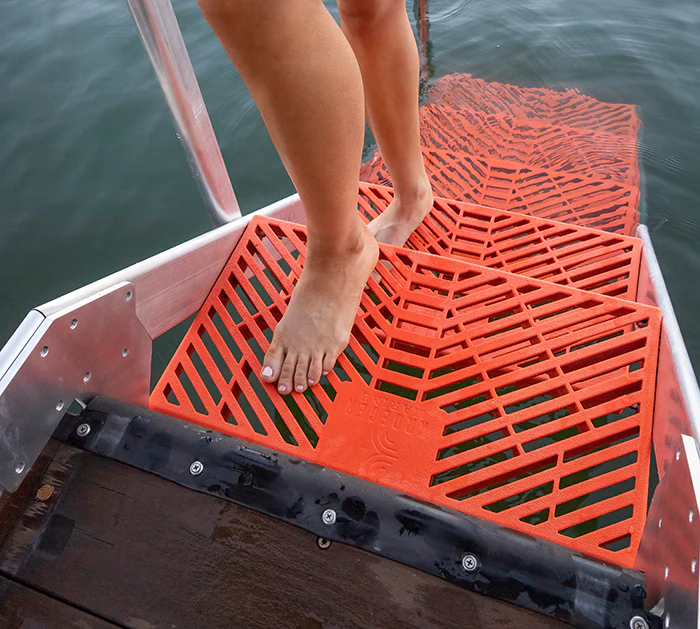
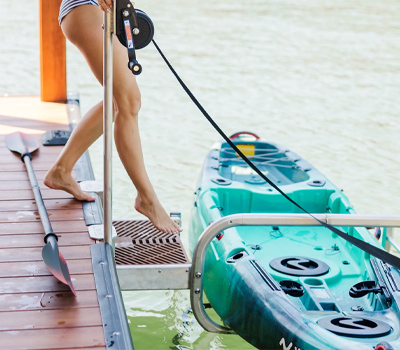
Accessories turn a basic dock into a functional waterfront space tailored to how you use the water:
- Dock ladders for safe water entry and exit
- Fiberglass storage boxes for gear, life jackets, and equipment
- Bumpers to protect boats and dock edges during docking
- Kayak racks and launchers for paddle craft storage and easy water access
Planning accessories during initial dock design simplifies installation and ensures proper weight distribution.
How to maintain your floating dock
Regular maintenance extends dock lifespan and prevents emergency repairs. The following steps cover what most dock owners can handle themselves, plus when to call in professionals.
1. Inspect your dock seasonally
Walk your dock at least twice yearly, both before boating season starts and after it ends. Look for loose hardware, unusual movement, visible wear on decking, and any changes in how the dock sits in the water.
2. Clean the decking and remove debris
Leaves, dirt, pollen, and algae accumulate on dock surfaces throughout the season. Periodic cleaning prevents staining, reduces slip hazards, and keeps your dock looking presentable. Pressure washing handles most buildup effectively.
3. Check flotation and hardware
Flotation problems show up as listing, sinking corners, or a dock that rides lower than it used to. Check hardware connections for looseness and look for signs of corrosion on metal components.
4. Address damage promptly
Small problems compound when ignored. A loose board or minor flotation issue costs far less to fix now than after it causes damage to surrounding components.
5. Schedule professional maintenance
Annual or biannual professional inspections catch issues you might miss and create documentation of your dock’s condition over time. Professional technicians also have tools and expertise for repairs beyond typical homeowner capabilities.
Learn more about our bundled service offering. Bundle and save on dock maintenance and cleaning today.
Marine construction for Lake Lanier and the surrounding lakes
Lake-specific knowledge shapes every aspect of dock design, installation, and maintenance. Water level patterns, bottom conditions, and regulatory requirements vary from lake to lake, and local expertise makes a measurable difference in project outcomes.
Lake Lanier dock services
Lake Lanier falls under Army Corps of Engineers management, which means specific permitting requirements and shoreline rules. Water levels fluctuate significantly throughout the year, making floating docks the standard choice for Lanier properties.
Lake Hartwell dock builders
Lake Hartwell spans the Georgia-South Carolina border, requiring familiarity with regulations in both states. The lake’s size and varied shoreline conditions call for site-specific design approaches.
Lake Allatoona floating docks
Lake Allatoona’s proximity to metro Atlanta makes it one of the region’s busiest recreational lakes. Active dock construction, repair, and maintenance services support the lake’s large boating community.
Chatuge Lake and North Georgia lakes
Chatuge, Nottely, and Blue Ridge lakes each have distinct characteristics like water clarity, depth profiles, and shoreline regulations that experienced local contractors understand and account for in their work.
Request your free floating dock estimate
Ready to build, repair, or upgrade your floating dock? Marine Specialties provides complimentary design consultations for waterfront property owners across Georgia and South Carolina. Our licensed and insured technicians bring decades of experience on Lake Lanier, Lake Hartwell, Lake Lake Allatoona, and surrounding waters.
Request an estimate or call (770) 531-7735 to schedule your consultation.
FAQs about floating dock services
How much does floating dock installation cost?
Floating dock costs vary based on size, materials, accessories, and site conditions. Simple configurations start lower, while multi-slip docks with lifts, premium decking, and covered roofs run considerably higher. A site-specific estimate provides accurate pricing for your project.
How long does it take to install a floating dock?
Most residential floating dock installations are completed within a few weeks after permits clear. Permitting timelines vary by lake and jurisdiction. Army Corps lakes like Lanier typically take longer than privately managed waters.
What is the difference between a floating dock and a fixed dock?
Floating docks rest on buoyant tanks and move with changing water levels. Fixed docks anchor to the lake bottom via pilings and remain stationary regardless of water level. Floating docks work better for lakes with significant seasonal water fluctuations.
Do I need a permit for a floating dock on Lake Lanier?
Yes. Lake Lanier falls under U.S. Army Corps of Engineers jurisdiction, which requires permits for dock construction, modifications, and certain repairs. Professional dock builders typically handle permitting guidance as part of their service.
Can a floating dock support a boat lift?
Yes, with proper design. Floating docks accommodate boat lifts and PWC ports when configured for appropriate weight distribution and structural support. Planning lift integration during initial dock design works better than adding lifts afterward.
How often should I have my floating dock inspected?
Professional inspections twice yearly, before and after boating season, help identify wear and prevent costly repairs. Older docks or those in high-traffic areas benefit from more frequent professional attention.