Everything You Need to Know About Why Spring Is the Time to Do Rip Rap
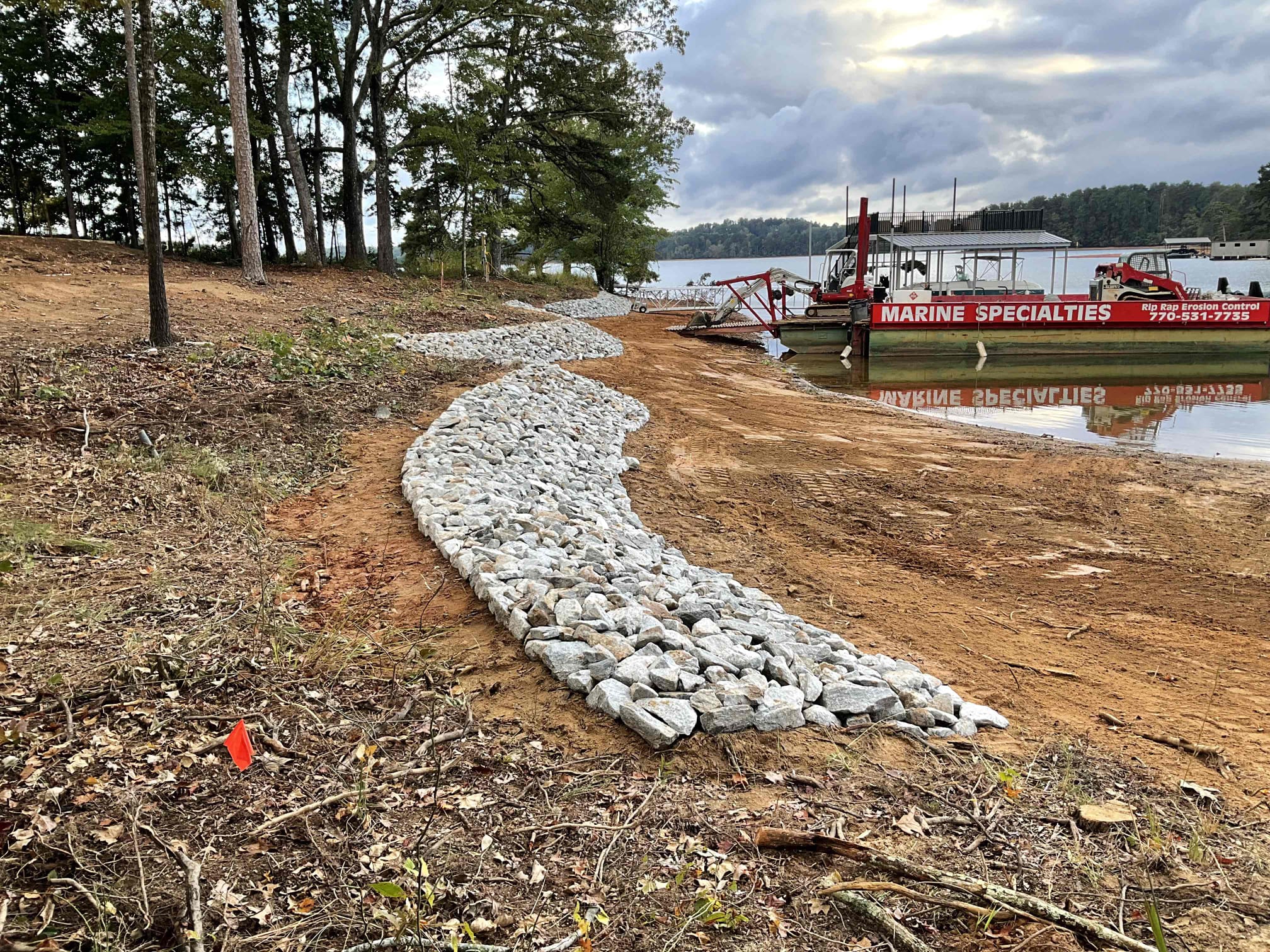
Why Spring Is the Time to Do Rip Rap (And Why It Matters for Your Shoreline)

Why Spring Is the Time to Do Rip Rap comes down to one simple truth: spring gives you the ideal conditions to do the job right — and doing it right is the difference between a shoreline that lasts 50+ years and one that fails within a season.
Here’s a quick summary of why spring wins:
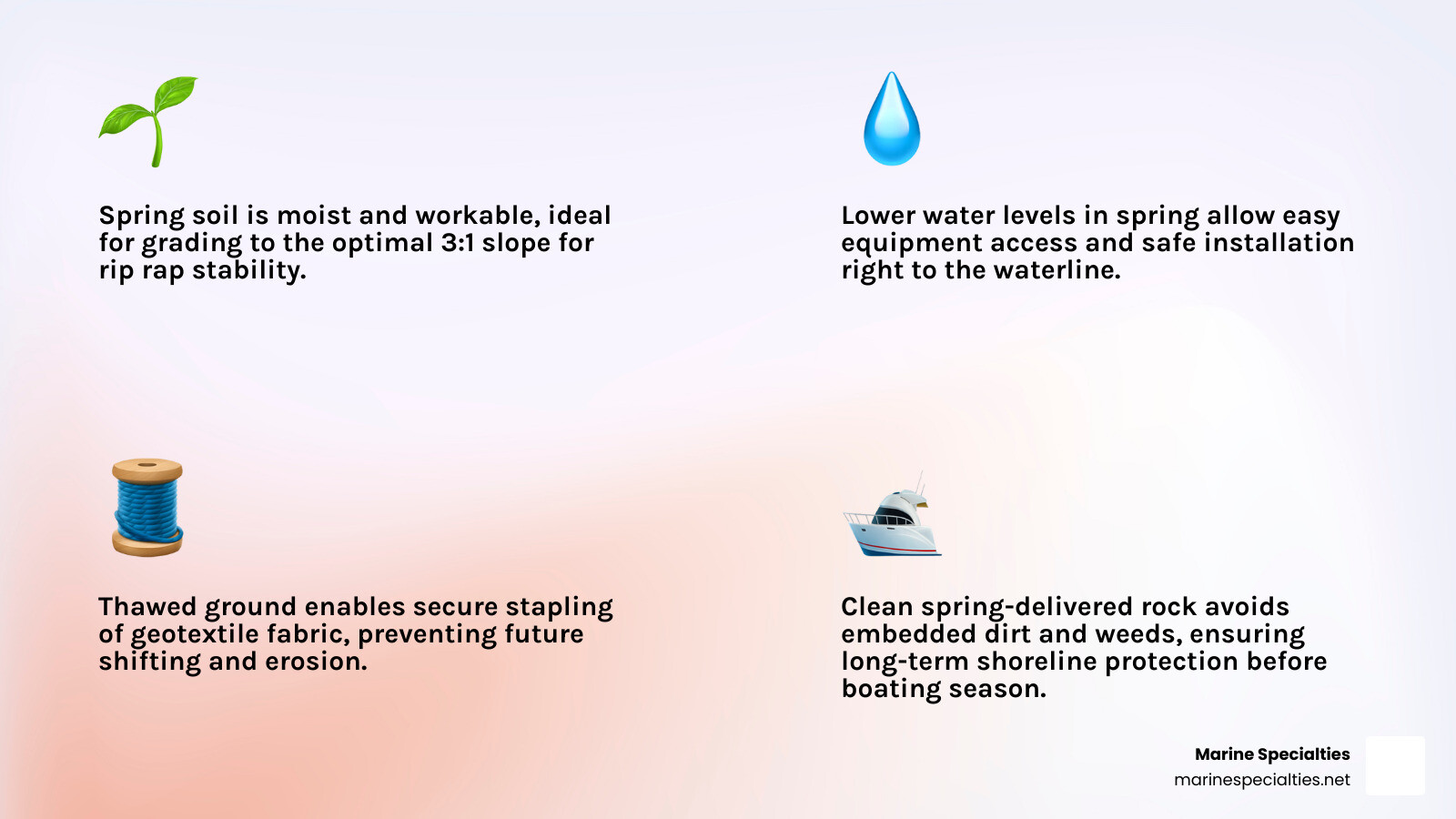
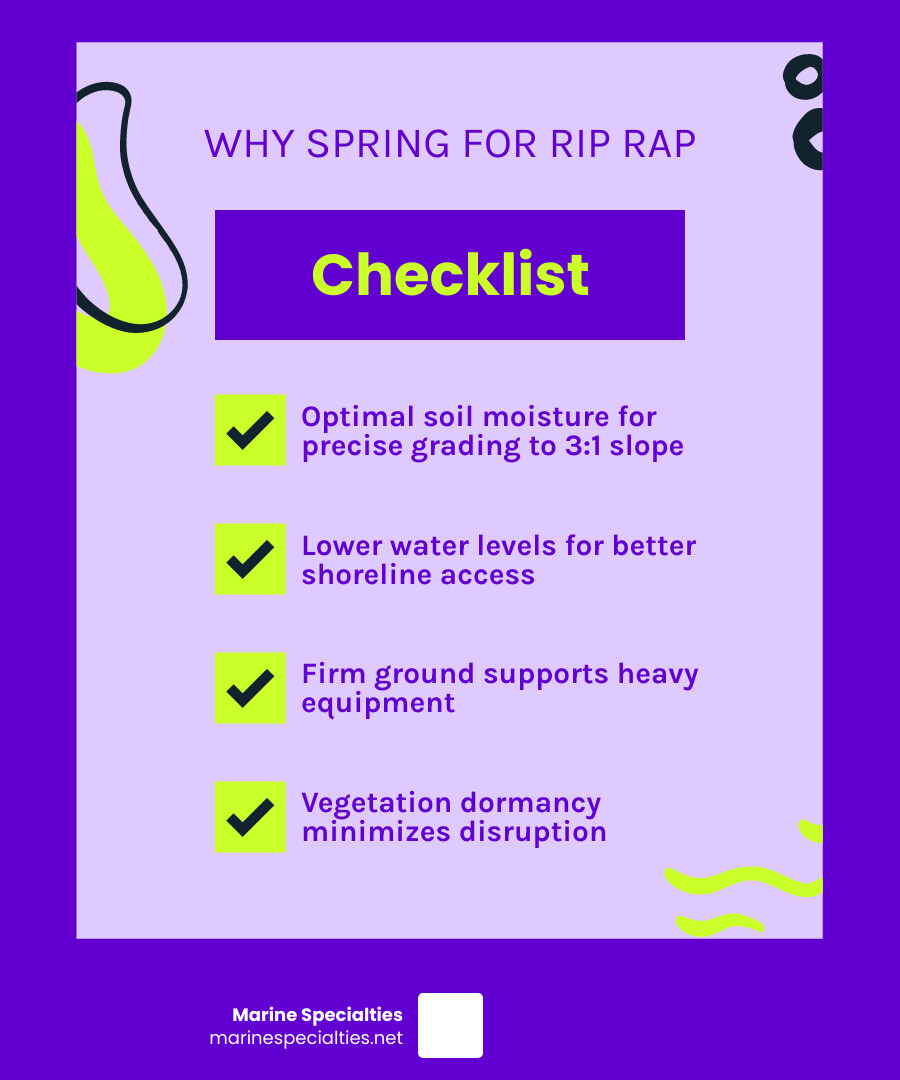
- Soil is workable — snowmelt and spring rains leave soil moist enough to grade properly, which is critical for achieving the required 3:1 slope
- Water levels are lower — easier equipment access and safer installation near the waterline
- Frozen ground is gone — geotextile fabric can be properly stapled and secured (impossible in winter)
- Rock arrives clean — spring-delivered stone isn’t frozen together with dirt, which prevents weed growth later
- Winter damage is fresh and visible — erosion gullies and ice damage are easy to spot and fix before summer
- You’re ready before boating season — your shoreline is protected before wake activity and summer recreation begin
Every spring, lakefront homeowners across North Georgia and South Carolina step outside and see what winter left behind: crumbling banks, ice-displaced soil, and shoreline that shrank a little more than the year before. It’s not dramatic — it rarely is. But erosion is relentless, and each season without protection makes the next repair more expensive.
Rip rap — the angular stone armor placed along your shoreline — is one of the most proven solutions available. But timing its installation is just as important as the installation itself.
What is Rip Rap and How Does it Protect Your Shoreline?
If you’ve spent any time on Lake Lanier or Lake Hartwell, you’ve seen those stretches of chunky, angular rocks lining the banks. That’s rip rap. According to the Comprehensive Guide for Rip Rap in Landscaping, rip rap is a form of “rock armor” designed to protect soil from the erosive forces of water.
But it isn’t just a pile of rocks. To work correctly, it must be comprised of angular stones. Unlike smooth river rocks that slide past each other, angular stones interlock like a jigsaw puzzle. This interlocking structure is what allows the barrier to stay in place when a massive wake from a passing wakeboard boat hits the shore.
The primary job of rip rap is energy dissipation. When a wave hits a solid vertical surface, like a concrete seawall, the energy has nowhere to go but down, which often scours the lakebed and undermines the wall. Rip rap, however, has a rough, porous surface. As water enters the gaps between the rocks, the energy is broken up and deflected. This significantly reduces sediment runoff and prevents your yard from slowly washing into the lake.
By choosing professional shoreline protection, you aren’t just stopping dirt from moving; you are stabilizing the very foundation of your property. This preserves your property value and ensures that your dock remains securely anchored to a solid bank rather than a receding one.
Why Spring Is the Time to Do Rip Rap Installation
Spring is the “Goldilocks” season for marine construction in Georgia and South Carolina. The transition from winter to summer provides a window where the environment is perfectly primed for earthmoving.
One of the biggest reasons Why Spring Is the Time to Do Rip Rap is the need for fixing spring runoff damage. During the winter, the ground goes through freeze-thaw cycles. By the time spring arrives, you can clearly see the “war stories” written on your bank—new gullies carved by heavy rains or slumping sections of soil. Spring allows us to repair this damage immediately while the ground is soft enough to reshape but dry enough to support heavy equipment.
Furthermore, many native plants are still in a state of dormancy or are just beginning to wake up. This means we can install the rock with minimal long-term disruption to your landscape’s root systems. It also places your property at the front of the line for “construction readiness,” ensuring your shoreline is armored before the heavy summer storms arrive.
Why Spring Is the Time to Do Rip Rap for Optimal Soil Grading
Grading is perhaps the most overlooked part of a successful installation. You can’t just throw rocks on a cliff and expect them to stay. For rip rap to be effective and last for decades, the bank must be graded to a stable 3:1 slope (three feet of horizontal distance for every one foot of vertical drop).
Spring soil moisture is ideal for this “earth sculpting.” In the heat of a Georgia summer, the red clay can become as hard as a brick, making it nearly impossible to cut and fill accurately. In the spring, the soil is malleable. This allows our teams to achieve the perfect grade and compact the soil properly so it doesn’t settle unevenly later.
Why Spring Is the Time to Do Rip Rap Before Peak Boating Season
If you live on Lake Allatoona or Lake Keowee, you know that once Memorial Day hits, the “quiet” lake life disappears. Constant boat traffic creates a non-stop barrage of wakes. If your shoreline is currently unprotected, those summer wakes will do more damage in three months than the rest of the year combined.
By preparing your boat dock for spring, you ensure that the transition from your land to your dock is safe and accessible. Unprotected shorelines often develop “drop-offs” near the dock ramp. Installing rip rap in the spring secures these access points, ensuring your family has a safe path to the water all summer long. Plus, getting the work done now means you won’t have contractors and excavators in your yard while you’re trying to host a July 4th barbecue!
The Dangers of Winter Installation: Why to Wait for Spring
It can be tempting to try and squeeze in a project during the winter, but there are several technical reasons why we advise against it. First and foremost is frozen soil. Even in the South, topsoil can freeze or become “tight” enough that proper grading is impossible.
According to experts on avoiding the tumble of rip-rap, winter installations often suffer from fabric instability. Rip rap requires a heavy-duty geotextile fabric underlayment to keep the rocks from sinking into the mud. In the winter, you can’t properly staple this fabric into frozen ground. When the ground thaws in the spring, the fabric can shift or “roll,” causing the rocks to tumble into the lake—a phenomenon known as ice jacking or heaving.
There is also the “dirty rock” problem. Stone quarried and delivered in the winter often has frozen dirt and fines stuck to it. When this rock is placed on your shoreline, that dirt eventually thaws and settles under the rocks, providing a perfect seedbed for weeds. By the time June rolls around, your expensive new shoreline looks like a “Chia Pet.” Spring installation ensures the stone is clean and the fabric is pinned tight, which are key erosion strategies for a maintenance-free result.
Step-by-Step Guide to Professional Rip Rap Installation
At Marine Specialties, we’ve spent over 35 years refining our process for the unique red clay and deep-water conditions of Lake Lanier. Here is how a professional rip rap shoreline installation should actually look:
- Site Assessment: We evaluate the fetch (the distance the wind travels over water), boat traffic patterns, and soil type. We also look for existing issues like undermined trees or failing timber walls.
- Permitting: We ensure all work complies with US Army Corps of Engineers regulations and local lake authority guidelines.
- Grading: We use specialized equipment to reshape the bank to that golden 3:1 ratio. This prevents the “wall” effect and allows waves to run up the slope, losing energy naturally.
- Geotextile Fabric: We lay down professional-grade filter fabric. This is the “secret sauce” that allows water to drain out of the bank while keeping the soil in place.
- Toe Protection: We dig a “toe trench” at the base of the slope, below the waterline. We place the largest, heaviest “toe boulders” here to act as an anchor for the rest of the wall.
- Rock Placement: We strategically place the stones (often by hand for precision) in an interlocking pattern. We aim for a thickness of 12 to 24 inches, depending on the energy levels of the site.
Materials, Costs, and Long-Term Longevity
When it comes to materials, not all rock is created equal. In our region, Granite is the gold standard. It is incredibly dense, heavy, and resistant to the “slaking” (crumbling) that can happen with softer stones like limestone.
Stone is typically categorized into classes:
- Class I (4-12 inches): Best for quiet coves and ponds with minimal wave action.
- Class II (12-24 inches): The standard for most Lake Lanier and Lake Hartwell shorelines.
- Class III (24+ inches): Reserved for high-impact areas or riverbanks with heavy current.
A well-installed rip rap shoreline is a generational investment, typically lasting between 25 and 75 years. While the initial cost per linear foot can vary based on site access (barge vs. land-based) and the amount of grading required, it is almost always more cost-effective than a seawall in the long run. Seawalls eventually crack or rotate; rip rap is flexible and “self-healing.” If a stone shifts, the rest of the system simply settles into the gap. Adding it to your spring boat dock checklist ensures you catch small shifts before they become big problems.
Enhancing Your Shoreline: Combining Rip Rap with Bioengineering
While rip rap is a “hard” engineering solution, it doesn’t have to look industrial. We often recommend a “living shoreline” approach, which combines rock with native vegetation. This is often called joint planting.
By inserting live stakes of willow or dogwood into the openings between the rocks during the spring, you can create a root network that further binds the soil. This has several benefits:
- Biodiversity: It creates a habitat for local birds and pollinators.
- Nutrient Runoff: Plants help filter out fertilizers and pollutants before they hit the lake.
- Aesthetics: Over time, the plants soften the look of the rock, making it blend into the natural Georgia landscape.
You can also use coir logs (made of coconut fiber) at the top of the rip rap to help establish new plants. Following seasonal maintenance tips like keeping invasive weeds out of your plantings will ensure your shoreline stays both beautiful and functional.
Frequently Asked Questions about Spring Rip Rap
Do I need a permit for rip rap installation in Lake Lanier?
Yes. Most lakes in our region, including Lake Lanier and Lake Hartwell, are managed by the US Army Corps of Engineers. They have strict guidelines on how much rock you can use and how far into the lake it can extend. At Marine Specialties, we handle the regulatory compliance and permitting process for you, ensuring your project meets all environmental protection standards.
How much does rip rap installation cost per linear foot?
Costs are influenced by several factors: tonnage of rock, transportation fees, and site access. If we can get a barge to your shoreline, it may be more efficient than bringing trucks through a manicured backyard. On average, you can expect to pay for the material by the ton and the labor by the linear foot. We provide complimentary designs and estimates to give you an exact figure for your specific property.
Can I install rip rap myself during the spring?
While it’s possible to move a few rocks yourself, professional installation is highly recommended for shoreline stabilization. Achieving the correct slope engineering and properly securing the heavy geotextile fabric requires specialized equipment and experience. If the “toe” of the wall isn’t set correctly, the whole thing can slide into the lake during the first big storm, wasting your investment in materials.
Conclusion
Protecting your shoreline is about more than just aesthetics; it’s about safeguarding your slice of the lakefront for years to come. Why Spring Is the Time to Do Rip Rap is clear: the soil is ready, the water is manageable, and the timing ensures you are protected before the summer rush.
With over 35 years of expertise, Marine Specialties is the premier choice for marine construction in North Georgia and South Carolina. From Gainesville, GA, to Anderson, SC, our licensed and insured technicians are ready to help you build a shoreline that stands the test of time. Whether you are on Lake Oconee, Lake Sinclair, or Lake Keowee, we bring the same commitment to quality and durability to every project.
Don’t wait until your yard is washing away. Request a complimentary rip rap installation estimate today and let us help you “armour” your property for the future.