Top Rated PWC Dock Lift Systems for Every Waterfront
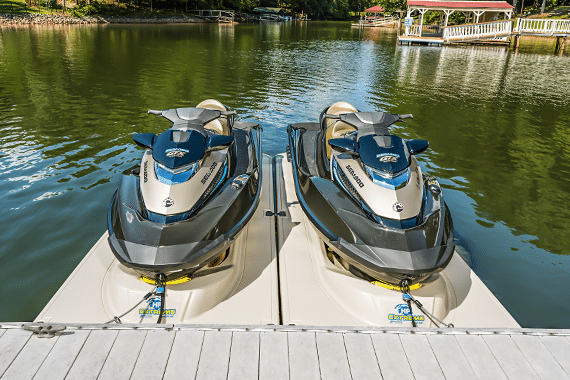
Why the Right PWC Dock Makes All the Difference on the Water
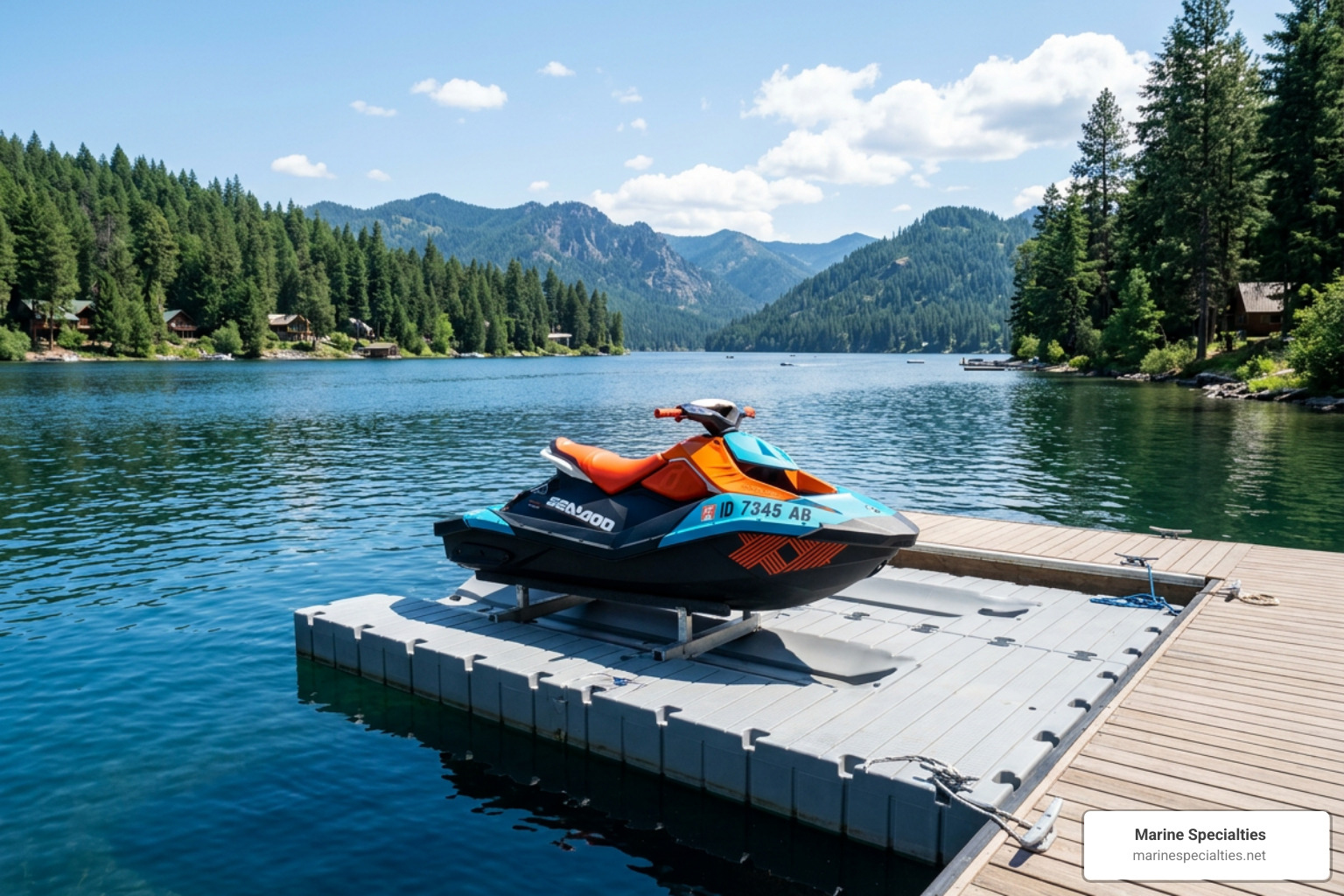
PWC dock systems are purpose-built platforms that let you drive your jet ski out of the water for storage — no ropes, no trailers, no mechanical hoists required.
If you’re ready to buy, here are the most important things to know fast:
- Drive-on floating docks are the most popular option — you ride onto the platform and the watercraft sits fully out of the water
- Weight capacity matters — most quality ports handle 1,150 to 2,000 lbs depending on the model
- Prices range from roughly $1,700 to $2,700+ for leading brands
- They fit most PWC brands — Sea-Doo, Yamaha WaveRunner, Kawasaki Jet Ski, and others
- Installation is flexible — standalone, attached to your existing dock, post-mounted, or fixed to a seawall
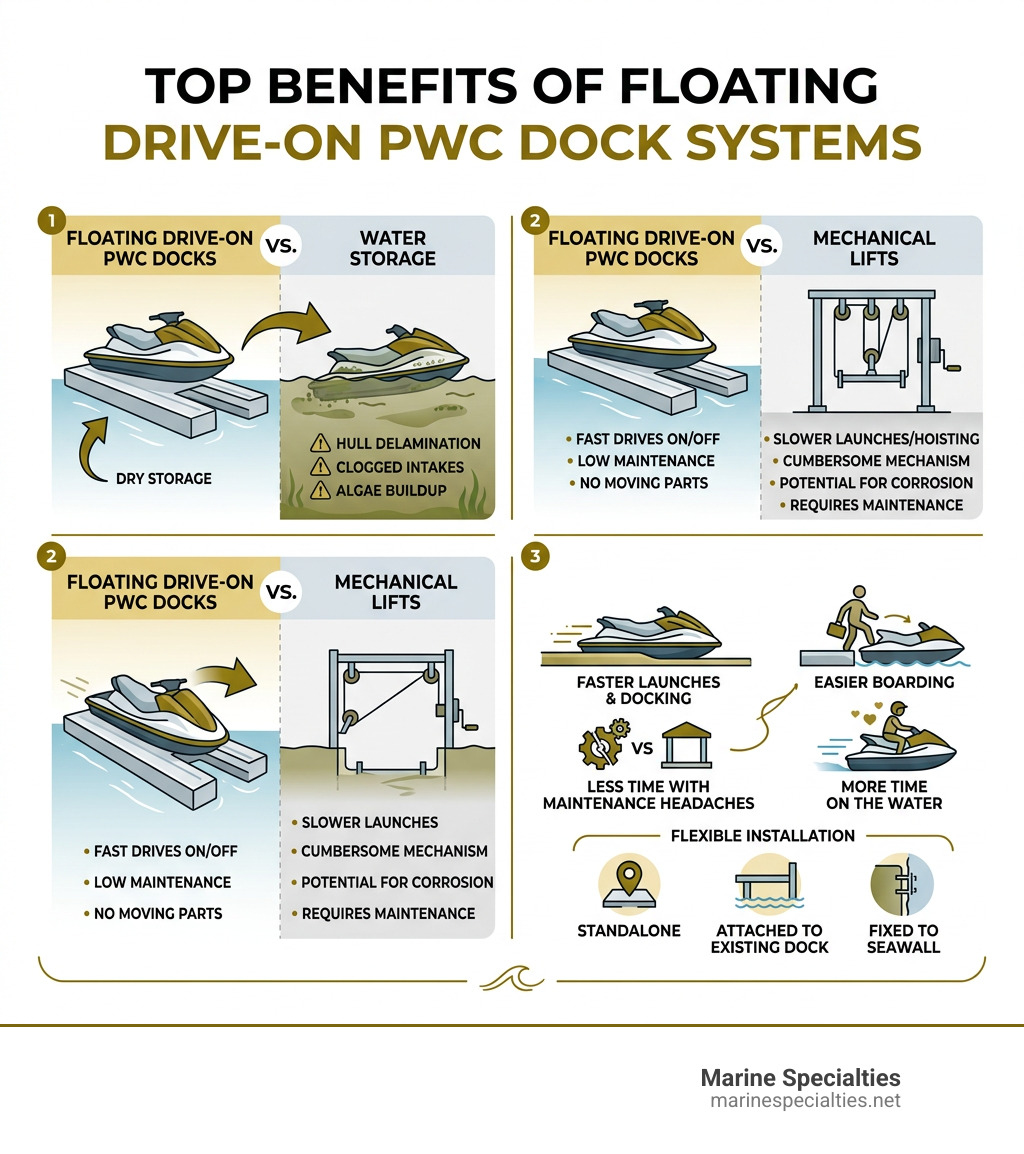
Keeping your jet ski in the water sounds convenient — until it isn’t. Prolonged water exposure causes hull delamination, clogged intakes, and algae buildup that shortens your watercraft’s life. A quality PWC dock solves all of that.
For lakefront homeowners in North Georgia and South Carolina, the right dock system also means faster launches, easier boarding, and less time dealing with maintenance headaches — and more time actually on the water.
Below, we break down the top-rated systems, key features to look for, and how to choose the right fit for your shoreline.
Understanding the Drive-On PWC Dock vs. Mechanical Lifts
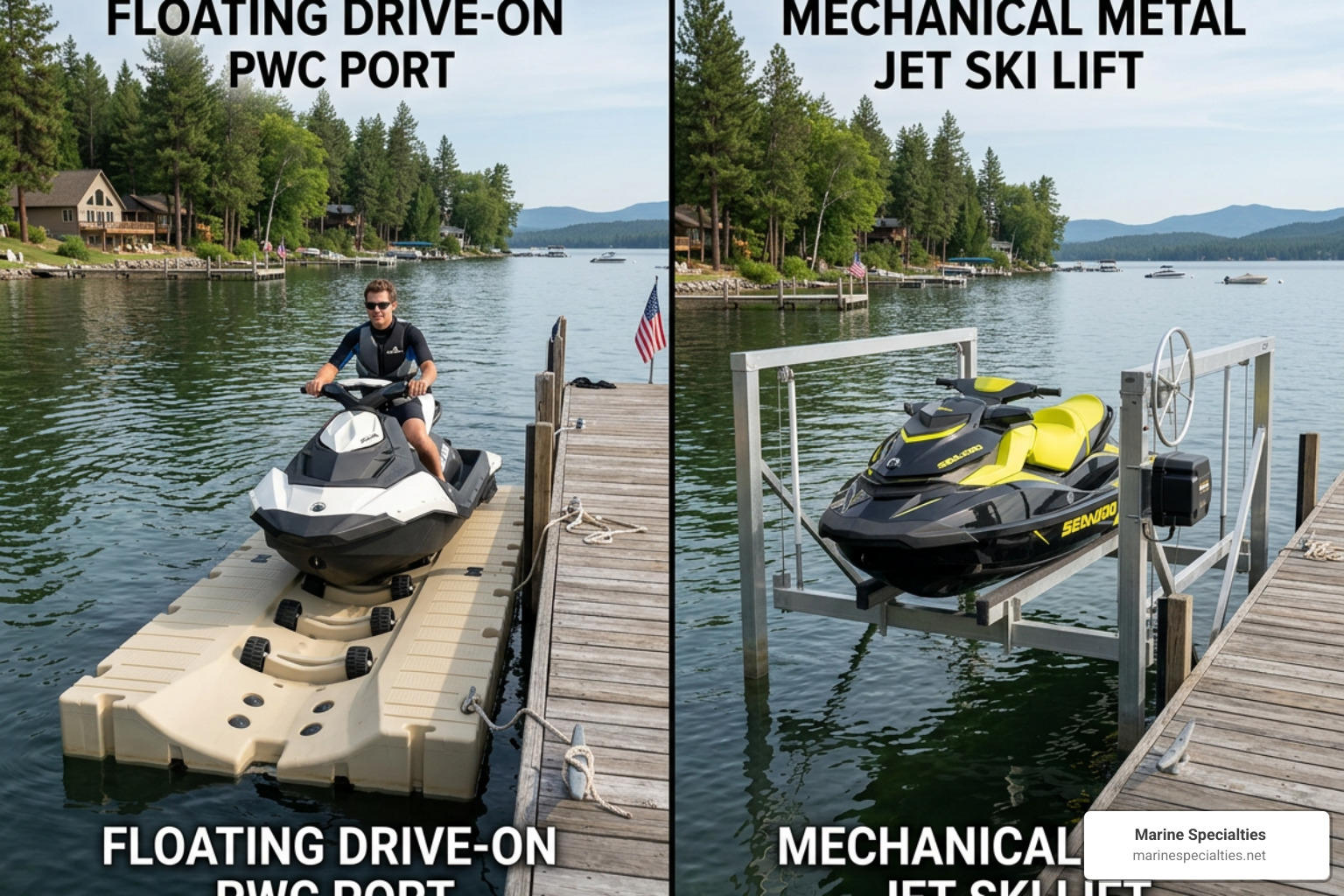
When we talk to folks on Lake Lanier or Lake Hartwell about storing their jet skis, the conversation usually starts with a choice: a traditional mechanical lift or a modern pwc dock. While both keep your craft out of the water, they function very differently.
A traditional mechanical lift uses a hoist system, often steel or aluminum, powered by a manual crank or an electric motor. These systems are effective but can be cumbersome. They often require expensive tools for installation and are difficult to move once they are set. Furthermore, metal lifts sitting in the water can suffer from corrosion and may have a more significant impact on the local marine environment due to the footprint of their pilings and hardware.
In contrast, a drive-on pwc dock is a floating platform. There are no cables to snap, no motors to burn out, and no greasy gears to maintain. You simply approach the dock at idle speed and use a gentle burst of throttle to slide the craft up onto the rollers.
The benefits of this design are substantial:
- Hull Preservation: Storing a PWC in the water leads to hull delamination and intake fouling. A drive-on port keeps the hull high and dry.
- Portability: These systems are modular. If you move to a different spot on the lake or want to reconfigure your slip, you can unpin them and move them with ease.
- Safety: Floating ports provide a stable, non-skid walking surface around your jet ski, making it much safer to fuel up or clean the footwells compared to balancing on a narrow metal beam.
The market for these systems is growing rapidly. According to Worldwide Drive-on Dock Market Research, the industry is seeing a CAGR of approximately 5%, driven by the demand for more durable, low-maintenance materials like high-density polyethylene (HDPE).
Popular Configurations for Your PWC Docking Platform
One of the best things about modern pwc dock systems is their modularity. At Marine Specialties, we’ve seen everything from simple single-unit setups to massive commercial-grade rows. Your choice depends entirely on how many “toys” you have and how much space you have on your shoreline.
- Single PWC Lifts: The most common choice for residential lakefronts. These are standalone units designed for one jet ski. They are perfect for small slips or attaching to the side of a main dock.
- Twin Port Setups: If you have two jet skis, you can link two ports side-by-side. Some models are even designed to fit two units into a standard 10-foot boat slip, maximizing your available space.
- Inline Docking: For narrow areas or long walkways, inline ports allow you to park multiple PWCs in a single file line.
- Combination Boat and Jet Ski Lifts: We often design custom boat dock systems where the PWC port is integrated directly into the main floating dock. This creates a seamless waterfront experience where all your vessels are stored together.
If you are curious about how these look in the real world, you can explore our PWC Docking Platform Installation page for examples of various configurations we’ve completed across Georgia and South Carolina.
Choosing the Right PWC Dock for Your Watercraft
Not all jet skis are created equal. A lightweight, two-seater Spark has very different needs than a massive, three-seater Kawasaki Ultra or a high-performance Yamaha GP1800R. When selecting a pwc dock, you must look at three critical factors: weight capacity, length, and hull geometry.
Modern PWCs have grown significantly in size. Some of today’s largest models can weigh close to 1,000 lbs dry. Once you add fuel (roughly 6 lbs per gallon), gear, and a full tank of water in the cooling system, you might be pushing 1,200 lbs or more.
| Model Type | Typical Capacity | Best For |
|---|---|---|
| Standard Port | 1,150 – 1,250 lbs | 2-seater models, Sea-Doo Spark, light Yamahas |
| Heavy-Duty Port | 1,450 – 1,650 lbs | 3-seater cruisers, Kawasaki STX, fully fueled gear |
| Epic/Extreme Port | 1,800 – 2,000 lbs | Largest 4-seater models, performance hulls, extra stability |
It’s always better to “over-buy” on capacity. A port with extra buoyancy will sit higher in the water, making it easier to drive on and providing a more stable platform for boarding.
Versatile Installation for Any PWC Dock Setup
Whether you live on the deep waters of Lake Oconee or the shallower coves of Lake Keowee, there is an installation method that works for your shoreline. We specialize in making these ports fit perfectly with your existing environment.
- Fixed Dock Attachment: If you have a stationary wooden dock, we use specialized bracket kits to allow the port to slide up and down with the water levels while staying securely attached to the dock.
- Floating Dock Hinges: For those with floating docks (common on Lake Lanier), we use heavy-duty hinges. This allows the pwc dock to move in sync with your main dock during boat wakes or wind.
- Post Mounts: If you don’t have a dock at all, we can use post mounts. We drive pipes into the lakebed, and the port slides up and down on those pipes. This is a great “standalone” solution.
- Seawall Brackets: In some areas, we can mount the port directly to a concrete or stone seawall using telescoping brackets.
Key Features and Material Standards for Quality Ports
If you’re going to invest in a pwc dock, you want it to last for decades, not just a few seasons. The harsh sun in Georgia and South Carolina can be brutal on plastics, so material quality is everything.
Look for these “gold standard” features:
- Roto-Molded Polyethylene: This construction method creates a single, seamless piece of plastic that is incredibly tough. Unlike modular “cubes,” a roto-molded port won’t crack at the seams.
- Foam-Filled Buoyancy: The best ports are filled with marine-grade expanded polystyrene (EPS) foam. This makes the port virtually unsinkable, even if the outer shell is punctured.
- UV Resistance: Ensure the material is UV-stabilized so it doesn’t become brittle or fade after years in the sun.
- Non-Skid Surfaces: Safety is paramount. A quality port will have a textured surface to prevent slipping when you’re walking around the craft with wet feet.
- Urethane Rollers: Many premium ports use adjustable urethane rollers. These are much softer on your hull than hard plastic and can be moved to match the specific “V” shape of your jet ski’s hull.
- Self-Bailing Decks: You don’t want water pooling on the dock. Look for designs that allow water to drain away naturally, keeping the walking surface dry and clean.
Essential Accessories and Maintenance for Longevity
Once your pwc dock is installed, a few choice accessories can make your life even easier. At Marine Specialties, we offer a full range of boat dock accessories to customize your setup.
- Bow Stops: These are soft bumpers at the front of the port that prevent you from over-shooting the dock. They often include a tie-down point for extra security.
- Crank Winches: While most ports are “drive-on,” a winch can be a lifesaver if your engine fails or if you prefer to pull the craft up manually for precise positioning.
- Buoyancy Boosters: If you upgrade to a heavier jet ski later, some brands allow you to bolt on extra flotation “pods” to increase the weight capacity of your existing port.
- Side-by-Side Kits: These kits include the hardware needed to link multiple ports together into a single, cohesive unit.
Maintenance Tip: These systems are incredibly low-maintenance. There are no moving metal parts to rust. Generally, all you need is a stiff bristle broom and some water to keep the surface clean. If you have significant algae growth, an eco-friendly soap and a high-pressure sprayer will make it look brand new.
Step-by-Step Guide to Docking and Launching
If you’ve never used a drive-on port before, the first few times can feel a little intimidating. Don’t worry—it’s actually very intuitive. Here is the safest way to do it:
- The Approach: Approach the rear of the pwc dock at idle speed. You want to be centered and perpendicular to the dock.
- The Contact: Let the nose of the PWC gently touch the entry throat of the dock.
- The Climb: Once centered, apply a steady, partial burst of throttle. The craft will move up the rollers and “nestle” into the safety position.
- Shutdown: Once you are fully on the dock, turn off the engine immediately.
- Launching: To launch, simply sit on the craft and use your body weight to rock it backward, or use the “roll-off” design to push yourself into the water.
For a visual demonstration, you can watch this drive-on docking and launching demonstration to see how smooth the process should be.
Frequently Asked Questions about PWC Ports
Can I leave my PWC port in the water during winter?
In most of our service areas, like Lake Lanier or Lake Oconee, the answer is yes. These ports are designed to handle the mild freezing conditions we see in the South. Because they are flexible and float, they simply move with the ice. However, if you are in an area with “flowing ice” (ice that moves with a current), we recommend shoring the dock or removing it to prevent impact damage.
How do I clean and maintain the docking surface?
Maintenance is a breeze. Use a high-pressure sprayer to knock off any lake grime or bird droppings. For stubborn spots, a stiff bristle broom and a bucket of water with eco-friendly soap will do the trick. You don’t need to worry about the underside; marine growth on the bottom of the float won’t hurt the performance or the material.
Are these systems suitable for saltwater and tidal environments?
Absolutely. Because they are made of high-density polyethylene and use stainless steel or composite hardware, they are immune to saltwater corrosion. For tidal areas (like coastal South Carolina), we use specialized anchoring kits that allow the port to travel vertically over several feet of tide change while keeping it perfectly aligned with your fixed pier or seawall.
Conclusion
Investing in a high-quality pwc dock is one of the best ways to protect your watercraft and enhance your time on the lake. Whether you’re looking for a simple standalone port or a complex multi-unit system integrated into a custom dock, Marine Specialties is here to help.
With over 35 years of expertise serving North Georgia and South Carolina lakes—including Lake Lanier, Lake Hartwell, Lake Keowee, and Lake Oconee—our licensed and insured technicians provide professional installation and complimentary designs tailored to your specific shoreline. We take pride in building docks that aren’t just functional, but are built to last a lifetime.
Ready to transform your waterfront? Contact us for more info about PWC docking solutions or visit our Gainesville or Anderson offices to start your project today.