How to Use Riprap for Erosion Control

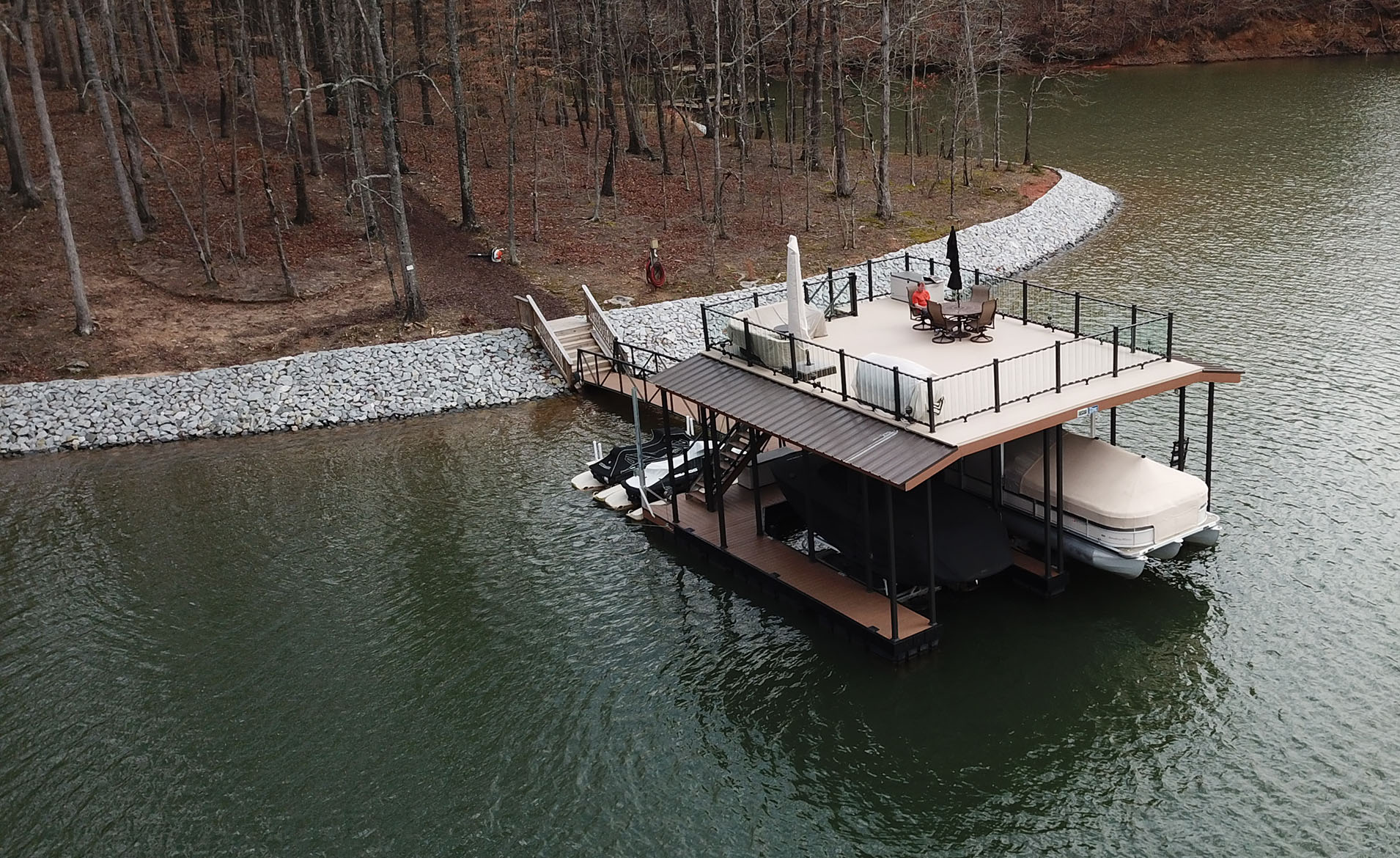
Rip Rap erosion control on Lake Lanier

When Your Shoreline Is Under Attack, Riprap Is the Answer

Riprap for erosion control on Lake Lanier is one of the most effective and durable methods for protecting shorelines, streambanks, and slopes from the relentless force of water.
Quick answer: How does riprap prevent erosion?
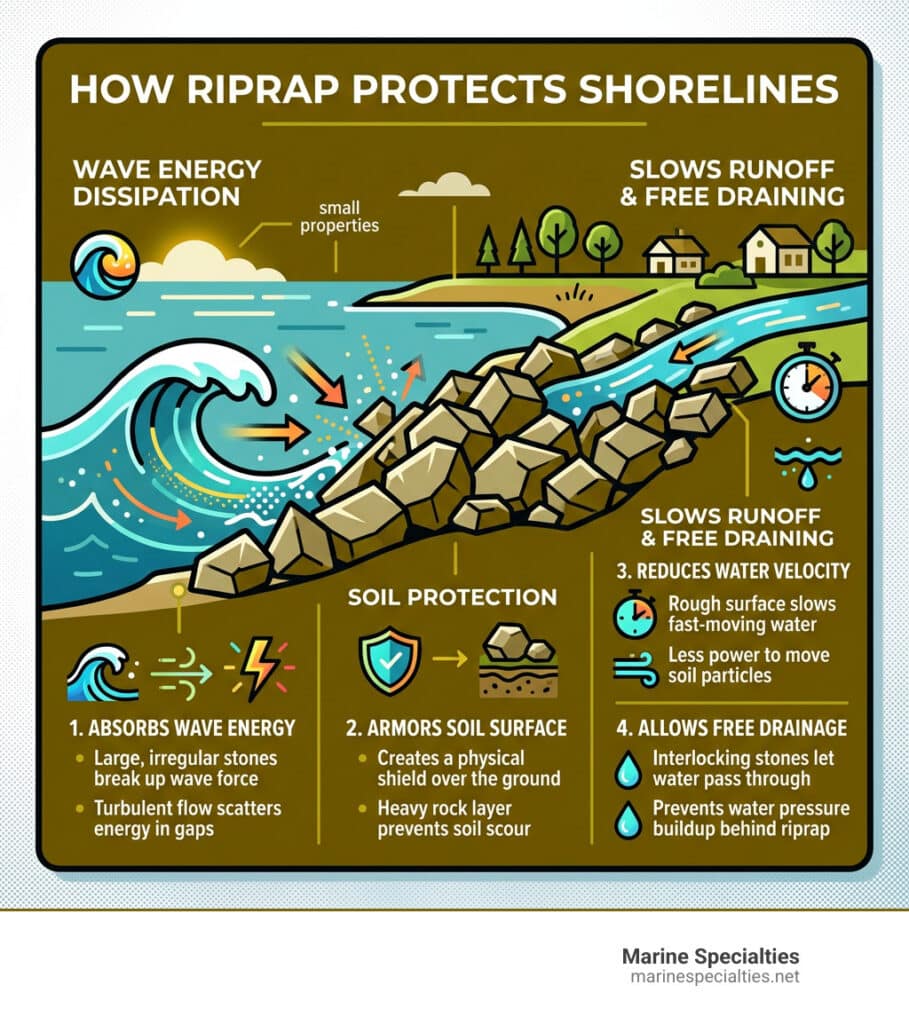
  • Absorbs wave energy — large angular stones dissipate the force of waves and fast-moving water before it can strip away soil
  • Armors the soil surface — a layer of heavy rock physically shields the ground beneath from erosion and scour
  • Slows runoff velocity — the rough, irregular surface of riprap reduces water speed, giving it less power to move soil
  • Drains freely — unlike concrete walls, riprap allows water to pass through rather than build up pressure behind it
  • Stabilizes slopes long-term — properly installed riprap remains effective for decades with minimal maintenance
If you own lakefront property in Gainesville, Flowery Branch, Cumming, or beyond, you already know the threat is real. Boat traffic, fluctuating water levels, and storm runoff can quietly eat away at your shoreline — year after year — until you’re left with collapsed banks, exposed roots, and a shrinking property.
P
The problem isn’t just cosmetic. Unchecked erosion can undermine docks, destroy landscaping, and reduce your property value significantly.
That’s exactly why riprap has been the go-to solution for engineers, land managers, and waterfront homeowners for decades. It’s not glamorous, but it works — even in high-energy environments where plants and lighter erosion controls simply can’t keep up.

Rip Rap erosion control in gainesville, flowery branch and beyond

Understanding Riprap for Erosion Control
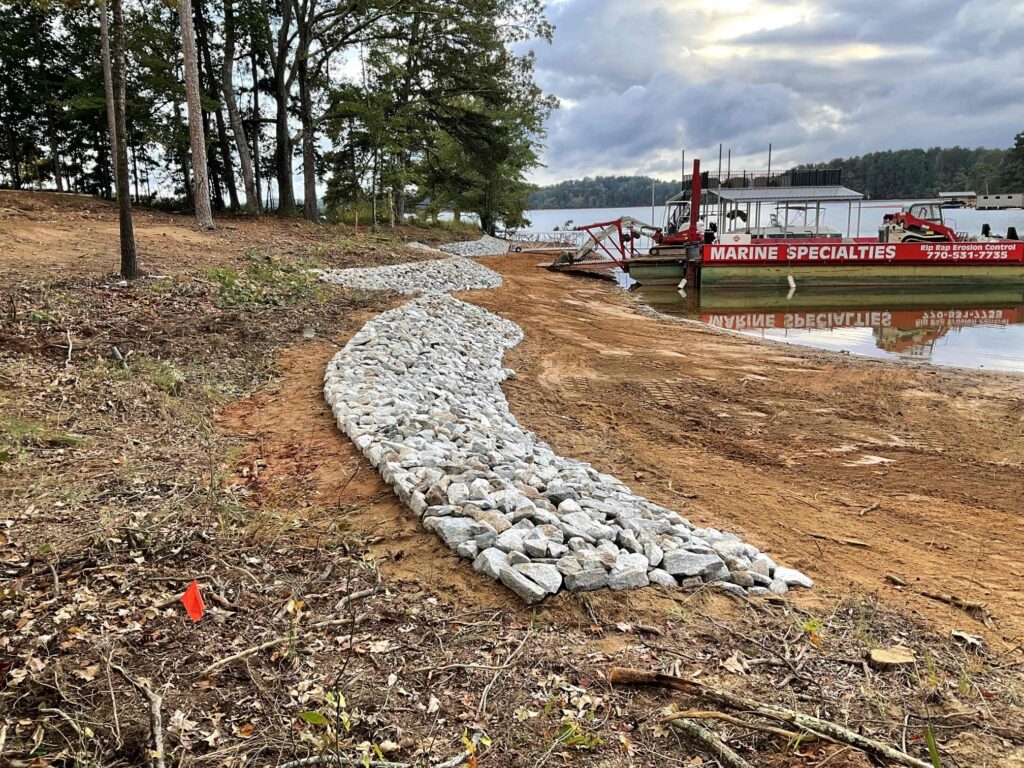
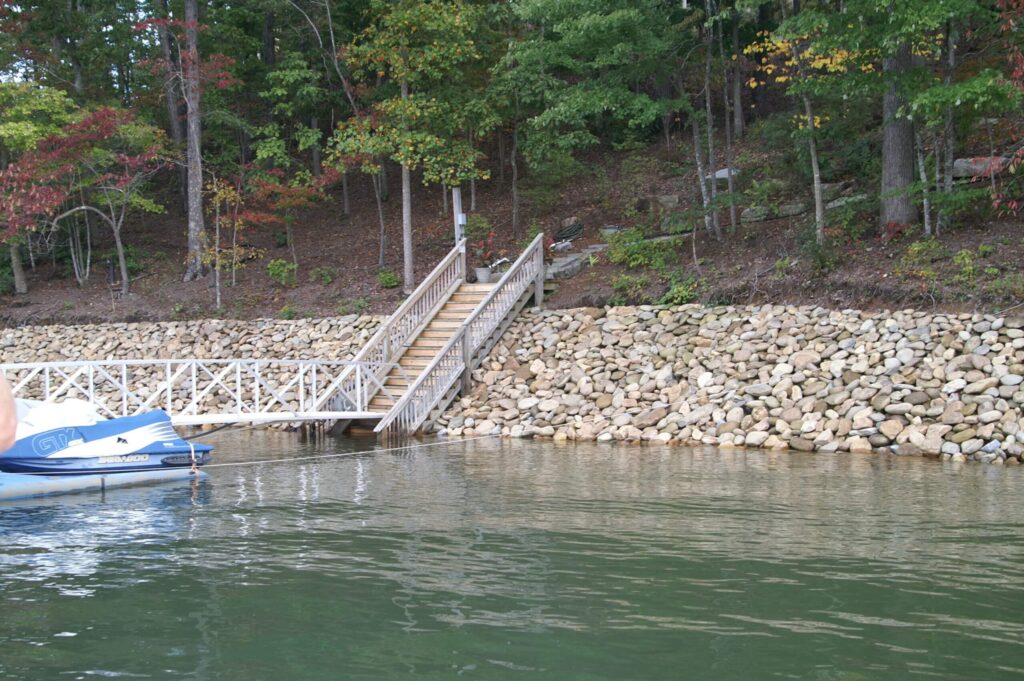
At its simplest, riprap is a permanent layer of large, angular stones, cobbles, or boulders. We use it to armor, stabilize, and protect the soil surface against the heavy-hitting forces of concentrated water flow or wave energy. You’ve likely seen it lining the banks of Lake Lanier or Lake Hartwell, looking like a rugged “rock armor” protecting the red Georgia clay.
The secret to why riprap for erosion control works so well lies in two physical properties: weight and roughness. Because the stones are heavy, they stay put even when waves from a passing wake hit the shore. Because they are angular and irregular, they create a high “surface roughness.” This roughness breaks up the laminar flow of water, slowing down the velocity of runoff and dissipating the energy of waves before they can reach the vulnerable soil underneath.
According to the Stormwater Best Management Practice: Riprap, this method is particularly useful when other stabilization practices, like simple seeding or mulching, have reached their limit. While mulch needs to achieve about 90 percent ground coverage to be effective, it just can’t handle the high-velocity “scour” that occurs at culvert outlets or on steep lake banks during a storm. Riprap provides that essential scour protection that keeps your land where it belongs.
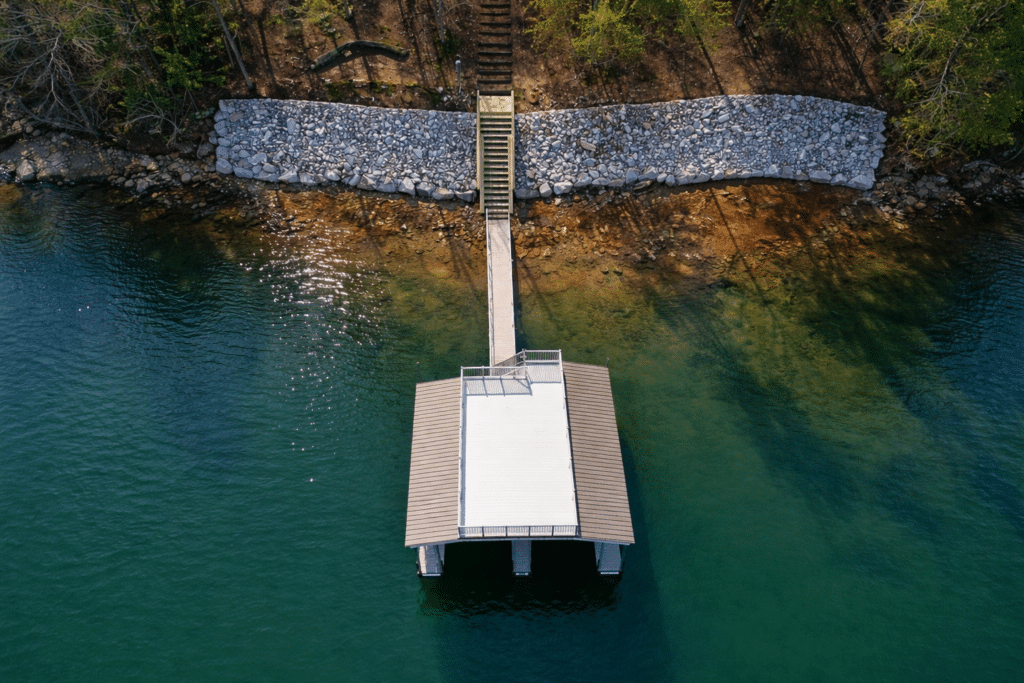
Lake Lanier Erosion Control - Cumming Georgia

Design Standards and Material Selection

You can’t just throw any old rocks on a bank and call it a day. Effective erosion control requires careful planning regarding stone gradation and sizing. We look at the “d50” median, which is the stone size that 50% of the mixture (by weight) is smaller than.
In our region, we primarily use granite. It’s incredibly durable, heavy, and has excellent freeze-thaw resistance—meaning it won’t crack or crumble when the temperature dips in North Georgia. We avoid materials like crushed concrete because they lack the long-term weather resistance and weight needed for permanent shoreline armoring.

Determining Proper Stone Sizing

How big should the rocks be? That depends entirely on how fast the water is moving. If you use stones that are too small, the water will simply wash them away. If they are unnecessarily large, you’re overpaying for material and labor.
Standard riprap stones typically range from 4 inches to over 2 feet long. For most residential shorelines, a median diameter between 9.5 and 23 inches is common. Engineers use shear stress and flow depth calculations to find the perfect fit. For example, if water is moving at 5 feet per second (fps), a 6-inch maximum stone size might suffice. However, if you’re dealing with high-velocity flows up to 15 fps, you may need massive 36-inch boulders.

Material Quality and Durability

Quality matters. We look for stone with a specific gravity of at least 2.5 (meaning it’s 2.5 times heavier than water). The stones should be angular rather than rounded. Think of it like a puzzle; angular stones interlock with one another, creating a stable, flexible “blanket.” Rounded river rocks, on the other hand, tend to roll and slide, which can lead to a total collapse of the protective layer.
Following MnDOT 3601 specifications and similar state guidelines ensures the rock is hard and resistant to weathering, so your investment doesn’t literally turn to dust over the next decade.

Key Components of Riprap for Erosion Control

A common mistake DIYers make is thinking the rocks do all the work. In reality, what’s under the rocks is just as important. Without a proper filter layer, water can still reach the soil, washing it out through the gaps between the stones. This is known as “soil piping,” and it will eventually cause the rocks to sink into the mud, leaving your bank unprotected.
To prevent this, we use filter blankets—usually made of gravel or specialized geotextile fabric. These layers allow water to drain through (preventing pressure buildup) while keeping the soil particles locked in place. You can learn more about these layers in our guide on Shoreline Protection Best Practices.

Geotextile Fabrics and Underlayment

For most of our projects on Lake Oconee or Lake Keowee, we utilize heavy-duty non-woven geotextile fabric. This isn’t your standard garden-center weed barrier; this is thick, needle-punched material designed for rugged construction.
We often recommend an 8oz or even a 12oz fabric for riprap applications. These fabrics are tear-resistant and UV-resistant, providing a dimensionally stable base for the heavy stone. Check out the 8oz Rip Rap Fabric Specification Sheet for a look at the technical requirements these materials must meet to survive under tons of rock.

Slope Limits and Layer Thickness

Physics has its limits. Riprap is generally considered unstable on slopes steeper than a 2:1 ratio (two feet of horizontal distance for every one foot of vertical rise). If your bank is steeper than that, the rocks are likely to slide down the hill. In those cases, we might look at alternatives like gabions or tiered retaining walls.
As for thickness, the “gold standard” is that the riprap layer should be at least 1.5 times the maximum stone diameter, and never less than 6 inches thick. This ensures there are no “thin spots” where the fabric is exposed or the soil is vulnerable.
Rip Rap and shoreline steps on Lake Lanier

Installation Process and Long-Term Maintenance

Proper installation is the difference between a shoreline that lasts 40 years and one that washes away in the first big storm. It starts with site preparation—clearing away debris and compacting the subgrade so the “foundation” is solid.
One of the most critical steps is “toe keying.” This involves digging a trench at the bottom of the slope (the “toe”) and filling it with larger stones. This acts as an anchor for the rest of the riprap, preventing the whole system from sliding into the lake. For more on the “why” behind these steps, see our blog on How to Safeguard Your Property with Rip Rap.

Professional Installation Techniques

When placing the stone, we have to be careful. You can’t just dump tons of rock from a height; if stones are dropped from more than 1 foot, they can puncture the geotextile fabric, ruining the filter layer.
We utilize two main methods:
  • Random Riprap: Stones are placed by machine and then adjusted to ensure even coverage. This is cost-effective and works well for large areas.
  • Hand-Placed Riprap: Stones are meticulously fitted together by hand. While much more expensive, this produces a beautiful, interlocking “pavement” that is incredibly stable and aesthetically pleasing.

Maintaining Your Riprap for Erosion Control

While riprap is “low maintenance,” it isn’t “no maintenance.” We recommend an annual inspection and a quick check after any major storm or period of high water. Look for:
  • Dislodged stones: If a few rocks have moved, replace them before the gap gets bigger.
  • Vegetation: While some plants are okay, large woody brush or trees can actually push the stones apart and compromise the structure.
  • Sediment buildup: If dirt and debris fill the gaps between the rocks, it can reduce the riprap’s ability to slow down water.

Costs, Alternatives, and Regulatory Compliance

Let’s talk numbers. The cost of riprap for erosion control can vary wildly based on the method and the stone size.
  • Random riprap can be as affordable as $64 per cubic yard for the material and basic placement.
  • Hand-placed riprap, because of the intense labor involved, can cost up to $750 per cubic yard.
Most residential projects fall somewhere in the middle, depending on site accessibility and the specific class of stone required. When you consider that a collapsed shoreline can cost tens of thousands in property value loss and structural repairs, riprap is often the most cost-effective insurance policy you can buy.

Why Riprap is the Optimal Choice for Severe Erosion

You might consider alternatives like seawalls or vegetative buffers. While seawalls are strong, they are often much more expensive and can actually cause “scour” at the base because they reflect wave energy rather than absorbing it. Vegetative buffers are great for the environment, but they often fail on steep slopes or in areas with heavy boat traffic.
Riprap offers the best of both worlds: it’s as durable as a wall but absorbs energy like a natural bank. It’s the “heavy-duty” solution for high-energy environments where you simply cannot afford for the protection to fail.

Regulatory Standards and Permitting

Working on the water means following the rules. In Georgia and South Carolina, work in “Public Waters” is often regulated by the DNR and the U.S. Army Corps of Engineers. There are often “work in water” restrictions during fish spawning time frames to protect the local ecosystem.

Frequently Asked Questions about Riprap

What is the best stone size for high-velocity water flow?

For high-velocity areas, like a steep drainage ditch or a point on the lake that catches heavy wind and waves, you typically need larger stones. While 6-inch stones work for slow water (5 fps), you may need 12-inch to 24-inch stones for faster flows. We always size the rock based on the maximum expected water velocity to ensure it stays put.

Standard riprap is generally not recommended for slopes steeper than 2:1 (horizontal to vertical). On steeper banks, the force of gravity often overcomes the friction holding the rocks in place, leading to “slumping.” For these areas, we may recommend “grouted riprap” (where stones are joined with mortar) or wire-encased gabions to keep the rocks secure.

Think of the filter layer as the “glue” that holds the system together. Without it, the fine soil particles underneath the rocks will eventually wash away through the gaps. Over time, this creates voids under the riprap, causing the stones to settle, shift, and eventually fail to protect the bank.

Conclusion
Protecting your shoreline isn’t just about curb appeal; it’s about preserving your investment and the natural beauty of the lakes we love. With over 35 years of expertise, Marine Specialties has seen every type of erosion challenge North Georgia and South Carolina have to offer. From the fluctuating red banks of Lake Lanier to the scenic shores of Lake Hartwell, we provide custom-designed, rock-solid solutions.
Whether you need a simple random riprap application or a meticulously hand-placed stone feature with integrated steps, our licensed and insured technicians are ready to help. We pride ourselves on creating shoreline features that are as beautiful as they are functional.
P
Ready to stop the clock on your shoreline erosion? Visit our page on Rip Rap Shoreline Installation to see how we can safeguard your property for decades to come. Give us a call today for a complimentary design consultation!
Rip Rap erosion control in cumming georgia - Army Corp